Puberty

Puberty

Puberty is a time in a child’s life when the body starts to change and transition into an adult. These changes happen over time and include physical, emotional, mood, or get sexual feelings. Puberty doesn’t start at the same time for everyone.

What is it?

Puberty is a time in a child’s life when the body starts to change and transition into an adult. These changes happen over time and include physical, emotional, mood, or get sexual feelings. Puberty doesn’t start at the same time for everyone. It often happens between ages 8 and 15 for girls and ages 11 and 16 for boys. Some experience puberty early on (Precocious puberty) while others experience it late (Delayed puberty). The remaining experience is in the average age range.

Precocious puberty
  • Precocious puberty: is the medical term for early puberty, also known as central precocious puberty (CPP). It occurs when hormones controlling puberty are released by the brain earlier than usual. This can be caused by psychological difficulties that may impact a child’s emotional development and is much more common in girls than boys. Precocious puberty’s exact cause can not be determined, however, a few cases are related to irregularities of the ovaries or testes, thyroid gland, or other hormone problems. It could also be attributed to genetic conditions and brain tumors, infections, or injury.

For diagnosis, the doctor will review the child’s and her/his family’s medical history, perform a physical exam, run blood tests to measure hormone levels, and X-rays of the hand and wrist to find out the bone age to see if the bones are growing too quickly. Additional testing includes MRI scans to determine any abnormalities) and thyroid testing if the child has shown signs of slow thyroid function like fatigue, increased sensitivity to cold, constipation, a drop in school performance, or pale, dry skin.


It is possible to receive treatment even if there’s no underlying medical condition. The treatment is called GnRH analog therapy which normally consists of a monthly injection of a medication to delay further development. The child will continue the medication until the normal age of puberty is reached. It will take about 16 months on average for puberty to restart. 


There is another treatment without the discomfort and irritation of regular injections. However, it requires a minor surgical procedure of placing an implant under the skin of the inner area of the upper arm. The implant is removed after a year and replaced if it is required.

Delayed puberty

Delayed Puberty is when puberty occurs late in a boy or girl. Conditions for this include no testicular volume increase by age 14 for boys and no breast development by age 13 for girls. For some, delayed puberty is genetic and will develop normally after being delayed. This is referred to as constitutional delay and is more common for boys. Delays can also be caused by chronic medical conditions like diabetes or cystic fibrosis, genetic conditions, pituitary or thyroid gland problems, ovaries or testes problems, and malnutrition. Girls who routinely exercise may experience delayed puberty in the onset of menstruation of up to one year or more when compared with non-athletes because they have little body fat. Puberty begins when there is a required amount of body fat.

For diagnosis, the doctor will take blood tests (to check hormone levels, look for chromosomal problems, and check for chronic disorders), an X-ray of the left hand and wrist (to estimate bone age), CT scan (to show bones, muscles, fat, and organs), and MRI (to check out the of tissues).

Inherited delayed puberty doesn’t require any treatment. Hormonal therapy treatment is available for some treatments which help to start secondary sexual characteristics to develop. For others, surgery could be done to solve a physical problem.

What happens to female bodies?
First signs of puberty
  • Breasts begin to grow where they can sometimes be very tender and one breast might develop several months before the other one.
  • Pubic hair also starts to grow, 
  • Some girls get more hair on their legs and arms.
Later signs of puberty
  • Breasts continue to develop becoming fuller
  • Period begins about 2 years after starting puberty
  • Pubic hair gets rougher and curlier
  • Underarm hair grows and some girls begin to grow hair on the upper lip
  • Sweating will increase causing body odor
  • Acne begins (skin condition consisting of different types such as whiteheads, blackheads and pus-filled spots called pustules)
  • White vaginal discharge
  • Growth spurt of 5 to 7.5cm yearly for 1 or 2 years
  • Weight for most girls as the body shape changes (more body fat along upper arms, thighs and upper back)
  • Hips get rounder and waist gets narrower
After about 4 years of puberty
  • Breasts get adult-like
  • Pubic hair spreads to the inner thigh
  • Genitals are fully developed
  • No more growth spurt

What happens to male bodies?
First signs of puberty
  • Testicles get bigger and the scrotum thins and redden
  • Pubic hair starts to appear at the base of the penis
Later signs of puberty
  • Penis and testicles grow and the scrotum eventually gets darker 
  • Pubic hair gets thicker and curlier
  • Underarm hair begins to grow
  • Sweating will increase causing body odor
  • Breasts might swell moderately temporarily
  • “wet dreams” (involuntary ejaculations of semen while sleeping) begin to occur
  • Voice cracks (voice gets very deep one moment and very high the next) but finally gets permanently deeper 
  • Development of  acne  (skin condition consisting of different types such as whiteheads, blackheads, and pus-filled spots called pustules)
  • Growth spurt and get taller with an average of 7 to 8cms annually and become more muscular
After about 4 years of puberty
  • Genitals get adult-sized and pubic hair spreads to the inner thighs
  • Facial hair grows
  • Height increase gets slower and stops growing completely at around 16 years (but could continue to get more muscular)

Male Anatomy

Male Anatomy

The male anatomy has a different physical build than the female anatomy.

Sexual health

Male Anatomy

External Anatomy

Penis

The Penis is a cylindrical-shaped organ located on top of the scrotum. It consists of erectile tissues that are covered in connective tissue and skin. Its function is allowing urination and sperm to leave the body. During sexual intercourse, it becomes erect allowing easy insertion into a vagina where sperm is ejaculated to reach and  fertilize the egg (if there’s no contraceptive). The penis is made up of several parts. 

  1. Shaft: main part of the penis and contains the urethra. It fills up with blood when it arouses which is called an erection.
  2. Glans penis: is a sensitive structure that is located at the tip of the penis through which the urethra opens. It contains the foreskin and frenulum.
  3. Foreskin:  also called prepuce is a loose fold skin that covers the glans. Every baby boy is born with it however, some have it removed through a process called circumcision. 
  4. Frenulum: a very sensitive area for many men where the foreskin connects with the shaft. Even after circumcision, a part of it usually remains.

Scrotum

Scrotum is the sack of skin containing and protecting the testicles,epididymis, and part of the spermatic cord. It is located behind the penis. It is outside the body to regulate temperature for the testicles. 


Anus

The Anus is an opening to allow feces to leave the body and can also bring pleasure for some people.


Internal Anatomy

Testicles

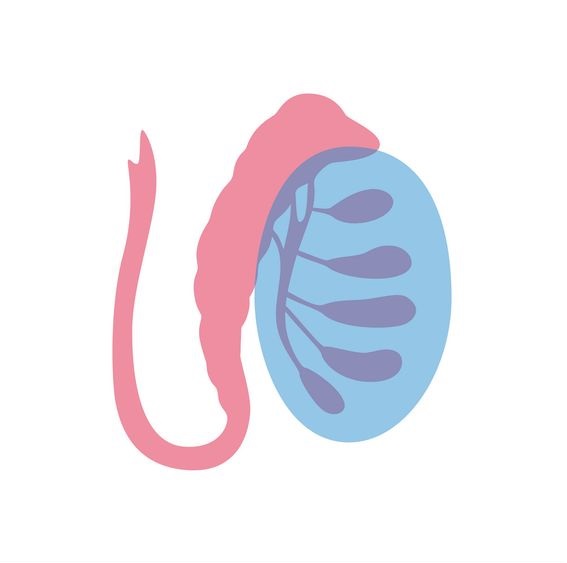
Testicles are 2 small organs found inside the scrotum responsible for making sperm and producing testosterone (a hormone responsible for male maturation such as developing muscles, deepening the voice, and growing body hair). They can feel firm and a little spongy and usually start growing between the ages of 11–13. 

Epididymis

Epididymis is a long spiral tube that connects the testicles to the vas deferens and where sperm matures (12 days). It is located on the top, outside edge of each testicle. The muscles of epididymis contract when ejaculating and shoot the sperm into the vas deferens.


Vas deferens

Vas deferens is a tube that connects the epididymis to the urethra and carries sperm to the seminal vesicles. It uses muscular contractions to launch the sperm forward. During a vasectomy (male sterilization), the vas deferens is cut. 


Seminal vesicles

Seminal vesicles are glands (bag-like) behind the bladder that release a liquid that makes part of semen in which the sperm floats in. The seminal vesicles have a structure called ejaculatory duct that connects with the vas deferens. The sperm has access to thick fluid containing fructose (a type of sugar), proteins, and other enzymes made by the seminal vesicles fors a source of energy and nutrition.


Prostate gland

Prostate gland is a small thick gland located below the urinary bladder. It produces fluids that thickens the semen for easy mobility and helps stay longer in the woman’s reproductive tract. 


Cowper’s (Bulbourethral) Glands

Cowper’s (Bulbourethral) Glands is a small round gland that prepares the urethra for ejaculation and produces pre-ejaculate/precum to decrease friction for sperm to easily move.

Urethra

Urethra is a tube that connects the bladder to the tip of the penis (the meatus) that allows urine to exit the body. It also passes through the prostate gland where an opening (ejaculatory duct) gets the sperm and fluid that make up semen.

Cremaster

Cremaster is a thin muscular layer that enables your scrotum and testicles to get closer to your body when you’re cold, aroused, or in a fight or flight scenario. It fully develops only in males but for females, it does not grow and only found in the uterus as a round ligament

Corpus cavernosa

Corpus cavernosa are two columns of spongy tissue that travel along the interior shaft that cause an erection when these tissues harden. The tissue has nerves, blood vessels, and muscle fibers.

Corpus spongiosum

Corpus spongiosum is the third column of tissue that travels along the interior shaft. It contains the urethra, and extends to form the glans penis. During an erection, the corpus spongiosum stops the urethra from closing.

Female Anatomy

Female Anatomy

The female anatomy has a different physical build than the male anatomy.

Sexual Health

Female Anatomy

External Anatomy

Breasts

Are located on the chest made of fat, muscle, ligament tissue, and an elaborate network of blood vessels and glands. These areas are specialized for producing milk to breastfeed. They are sized and shaped differently from person to person and are determined by weight, exercise, age, and pregnancy & breastfeeding. The more fat in the breast the bigger it is and the older the person is the more the breasts will sag. During pregnancy and breastfeeding, they will enlarge due to distribution of fat and tissue making the breast swell.

Major external components

  • Breast tissue: is a complex system of tissues linked to nerves, blood vessels and a group of fat cells called adipose tissue. The size differs from one person to the other because of a mixture of genetics and body mass.
  • Nipple: is the rounded area containing nine milk duct openings each where milk drains to feed a baby. It has several nerve endings (state of heightened sensitivity) making them a zone of sexual stimulation. Some women have nipples that stick out while others have flat or inverted nipples. They can also have hair and small bumps. 
  • Areola: is the pigmented circular area surrounding the nipple. It varies in size from person to person. It contains the Montgomery glands that are small and produce lubrication preventing the nipple from drying out, especially when nursing. They can grow in size during pregnancy and could remain larger and sometimes darker even after giving birth. 

Internal components: The breasts are essentially made of fat. The size is determined by the amount of fat. However, the size doesn’t relate to the ability for the amount of milk production.

  • Alveoli: are groups of milk producing cells inside the breasts.
  • Lactiferous ducts: are passageways through which breast milk exits to feed a baby.
  • Lobules: are groups of alveoli that drain into lactiferous ducts and then into lactiferous sinuses (area where milk is stored) that enable milk flow from the nipple.
  • Mammary glands: start to develop after puberty in females due to the release of estrogen. These glands are in charge of milk production but only after childbirth.

Mons Pubis

is the fatty area shaped like an upside-down triangle that extends from the top of the pubic hairline to the clitoris.  Its funstion is to protect the bone during sexual intercourse. The mons pubis is more prominent in females but is also present in males. The Mons Pubis is referred to as the mons in males and the mons veneris in females.

Vulva


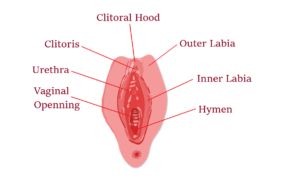
refers to the external parts of a female’s genitals that comprise the labia majora, the labia minora, and the glans clitoris. Some people refer to this part as the ‘vagina’ but the vagina is only the opening through which you have intercourse and give birth.

  • Labia major (Outer Labia): are the outer folds of skin that surround the vaginal opening and are the protective layer. It is usually bigger than the labia minora but it can also be the same size. Their color differs from person to person. It can be pink, crimson (deep red), or reddish-brown. The labia majora can be short or long and could be smooth or wrinkled.
  • Labia minora (Inner Labia): are the slim folds of skin within the labia majora that enclose the vaginal and urethral openings. They protect the clitoris, urethra, and vulva and can be light to dark pink, brown, or purple. Like the labia majora, labia minora can also differ in size from person to person. Some labia minora hang down past the outer labia and others are so little they aren’t very visible. It is also possible for a person to have labia majoras that look different on each side.
  • Clitoris: a large amount of the clitoris is internal but has a tiny external nubis (a small protrusion). Its appearance can be larger or smaller and is extremely sensitive making it suited for sexual stimulation. It contains similar nerve endings like the Glans penis in males.
  • Clitoral hood: is the fold of skin surrounding the top of the clitoris that prevents it from too much stimulation and external irritation. It has glands to produce a lubricant called sebum that enables your hood to move smoothly over the glans and shaft of your clitoris. When sexually aroused, the glans clitoris engorges and swells up to move your hood to expose your glans.
  • Urethral opening: is located below the clitoris and above the vaginal opening. It allows urine to be dispelled from your body through a tube connected to the bladder. Unlike males, females use their urethra only for urinating. It is about 4.8 cm wide to 5.1 cm long.
  • Vaginal Opening: is the internal canal (where penises go in, you push babies out, and for some, where tampons go in) below the urethral opening. The vaginal opening can expand and contract but doesn’t stay stretched. The hymen is a thin tissue that partially covers the vaginal opening.

Dam

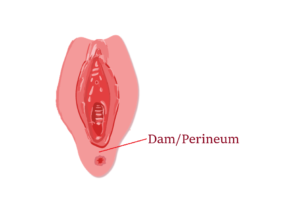
is the area between your vulva and your anus that can be referred to as the perineum. It has several nerve endings that are enjoyable when stimulated.

Anus

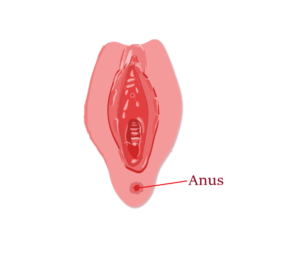
is an opening that allows feces to leave your body. It is usually covered in pubic hair after puberty.

Internal Anatomy

Vaginal wall

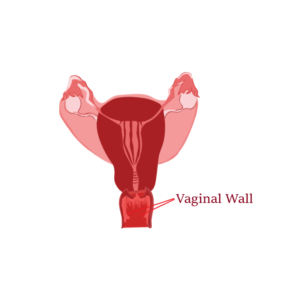
Is a muscular tube that is exceptionally elastic and extends from the vaginal opening to the cervix. Its function is to allow menstrual blood to flow out, sexual intercourse, and childbirth. Its size is conditional on different circumstances such as between 6.98 and 8.25 cm long and narrow when unstimulated, can stretch between 10.79 and 12.06 cm long during sex and when giving birth, the tissues can expand enough to accommodate a baby. 

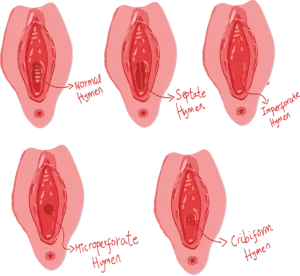
Hymen

It is a thin tissue surrounding the opening to the vagina. Most hymens are shaped like a half-moon which enables menstrual blood to leave the vagina. However, some hymens are shaped in a way that it can interfere with menstrual flow, wearing tampons, or having intercourse. It can get torn after the use of tampons, playing sports, or having intercourse for the first time. It is also possible not to have a hymen at all and therefore can’t be linked with virginity.

The common types of hymens are:


  • Normal: usually half-moon-shaped opening.
  • Cribriform: has several small openings through which menstrual blood and vaginal secretions can flow out but cannot allow tampons or have intercourse.
  • Imperforate: has no opening at all and requires surgery to permit menstrual flow.
  • Microperforate: has a very small opening through which menstrual blood may flow out but it doesn’t allow tampons to be inserted.
  • Septate: is a thin strip of tissue in the center that allows menstrual flow but prevents the use of tampons.

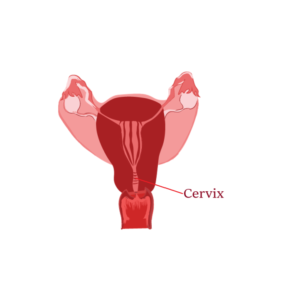
Cervix

is a narrow tube made of tissue that separates the vagina from the rest of the uterus. It allows for menstrual blood to leave the uterus and to pass through the vagina. It also enables the semen to move through the cervix and enter the uterus. During childbirth, it can expand to allow a baby to move through the vagina.

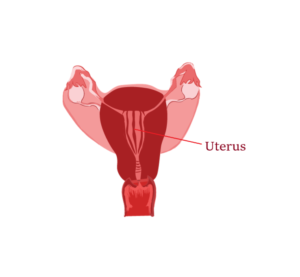
Uterus

is a muscular organ that is hollow and located between the bladder and rectum in a womans’ pelvis. The lining of the uterus allows the egg to be fertilized and implanted. Its main purpose is to sustain the growing fetus prior to birth. If the egg isn’t fertilized, the uterine lining sheds (the menstrual period). The menstrual cycle length varies from one person to the other but typically happens every 28 days. 

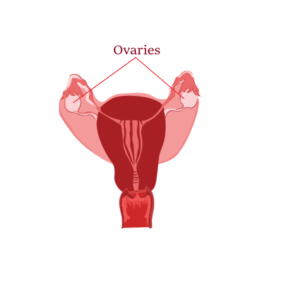
Ovaries

Are small circular organs that produce eggs attached to fallopian tubes on both sides of the body. However, not all females have two. They also produce hormones called estrogen (responsible for female physical features & reproduction) and progesterone (regulates menstruation and ovulation).

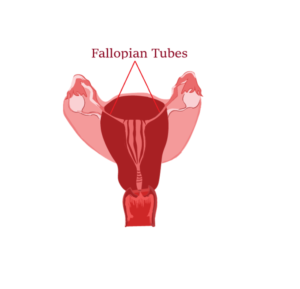
Fallopian tubes

Are muscular tubes that join the ovaries to the uterus. The main purpose is to allow the egg to move towards the uterus for possible fertilization. Ectopic pregnancy occurs when a fertilized egg implants in this tube which can cause it to burst.

wpChatIcon