Pregnancy

Pregnancy

Pregnancy is an exciting time for a woman who has been looking forward to being a mother. It typically lasts around 9 months or 40 weeks, but you may give birth before 9 months or even after. It is divided into 3 parts, called trimesters, in which different changes occur. You will experience a lot of changes as your pregnancy advances which is a normal part of pregnancy and shouldn’t be the cause of worry. Your body will start to change and it might require you to change your day-to-day activities such as eating more and sleeping earlier.

The first trimester lasts from the 1st to the 12th week of your pregnancy. During this stage, your period will stop and your body will go through different physical and hormonal changes. Some women experience morning sickness (upset stomach), and certain food cravings while others have difficulty even smelling certain types of food. Other changes include sore breasts and frequent urination. 

The second trimester occurs in the 13th up to the 28th week and during the 20th week, you can feel your baby’s movement which can be a source of joy for most pregnant women. Many women experience less discomfort when compared to the first trimester, for most women morning sickness will decrease during this period and most women have been noted to enjoy their pregnancy during this time. Most pregnant women will also notice obvious stomach and breast growth. Your body will start to ache, your stomach becomes itchy, your ankles, fingers, & face will start to swell, and more. 

The third trimester is the 29th until the 40th week of pregnancy and is when the baby’s bones are soft but almost fully developed. During this trimester for most women, the increased urination they experienced during the first trimester will come back. Additional changes in this stage include trouble breathing, heartburn, sticking out belly button and trouble sleeping, another thing to bear in mind, during this trimester is what’s called false labor or braxton hicks contractions, these contractions might feel like actual labor but they aren’t, so no need to panic.

Not all pregnancies will go over smoothly or with little discomfort. Some women experience unusual pain or discomfort that could threaten their and their baby’s life. Sometimes pregnancies can be abnormal that are caused by issues with the tissues needed for the fetus. This is why you must have regular doctor visits to ensure the best outcome for you and your baby during the entire pregnancy. You should be careful not to overwork yourself and be healthy by exercising like walking every day and eating a balanced diet. If you experience vaginal bleeding, intense cramps, pain while peeing, severe headaches, and more, you need to go to your doctor for a check-up immediately.

10 Things You Should Know About Contraceptives Before Your Next OB-GYN Visit

Contraceptives can be tricky, especially since there are so many to choose from! Which one protects us from STI’s, and which ones protect us from pregnancy? Here are Letena’s Top 10 list of things you should know before setting up your next OB-GYN appointment. 

Contraceptives are methods you can use that would help protect you from Sexually Transmitted Infections as well as prevent the occurrence of pregnancy. 

1. Women can take contraceptives for other reasons than preventing pregnancy, such as regulating periods, hormone imbalances, and reducing blood flow during their period.

2. There are a variety of options available based on your preference and lifestyle choices as well as body type.

When you decide to be sexually active, it’s a smart choice to schedule an appointment with your gynecologist and learn about contraceptives and decide which one to use. This process is known as contraceptive counseling. This decision should not be made lightly, and that’s why a proper discussion with your gynecologist is always advised. For example, if you are a 24 year-old woman who is interested in a long-term effective contraceptive option, the birth control pill might be one option for you. If you are forgetful or don’t have a daily routine, it may not be the best because it relies heavily on taking it around the same time everyday for protection. The implant might be a good option for you if you are thinking about being sexually active and would want a long-term option that would last about 3-5 years, but not if you are afraid of weight gain and/or are already prone to hormonal disturbances. These and such things are what you should discuss with your care provider during a counseling session.

3. Using Contraceptives will NOT make you infertile.

Almost all contraceptives available today are reversible, most offer no delay at all in women who want to get pregnant immediately after stopping contraceptive use.

4. Contraceptives DO NOT cause birth defects. 

Although a heavily circulated myth in Ethiopia, using contraceptives will not affect you or your unborn child in any way at all. Contraceptives only act by releasing hormones in the body, and have no clinically proven effects on unborn children.

5. There are more options than the “morning after pill’’ for women requiring an emergency contraceptive after unprotected sexual intercourse or a missed pill.

Other than the so-called‘’ morning after pill’’ the IUD is also an option for sexual intercourse that occurred without protection. But it’s important to bear in mind that while they may be a somewhat reliable option for preventing pregnancy but they have no impact whatsoever on prevention against sexually transmitted infections.

 6. Emergency Contraceptives aren’t a reliable option for long-term prevention against pregnancy.

Emergency contraceptive methods are ideal for preventing pregnancy after unprotected sexual intercourse occurs. If you had sexual intercourse without condoms or any other contraceptive methods, emergency contraceptives are a safe choice for you – they can be taken up until 72 hours of intercourse for maximum results. There are studies that show it has some efficacy up to 5 days after unprotected intercourse. However, using them continuously isn’t advised. If you are sexually active it’s better to consult your health care provider and get on a more reliable contraceptive method.

7. Contraceptives DO NOT cause abortions or harm an existing pregnancy.

Most health care providers in Ethiopia wait until you are on your period to provide you with a contraceptive method. This is meant to ensure that you aren’t pregnant before you start using contraceptives. Even if you used emergency contraceptives while unknowingly pregnant, it will not affect the unborn fetus.

8. The only contraceptive options available today that protect against both sexually transmitted infections and pregnancy are condoms.

Condoms are the most widely known and widely available contraceptives we have in the market. They are available for both sexes, but the female condom could be easily dislodged during sexual activity so it often requires the user to hold it during sexual intercourse. Because of this reason the male condoms are much preferred over female condoms.

Another not widely known fact about condoms is that some people can be allergic to them. This situation can result because of the material some condoms are made of which is called latex. This situation can result in itchiness, swelling, and redness around the exposed(genital) area. But the good news is that there are condoms available that are made of other materials besides latex, that could be offered to such users.

9. Birth control pills, also called Combined Oral Contraceptives, are one of the most effective contraceptive methods out there. As effective as they are for preventing pregnancy, they don’t protect you from Sexually transmitted infections.

These are effective methods for women who remember to take the pill every day. For it to work effectively, the pill must be taken continuously even if you aren’t planning on having sex that day. Another awesome fact about Birth control pills is that they can protect you from some cancers like cancer of the ovaries and cancer of the lining of the uterus, and this protection continues even after you have stopped using birth control pills. Birth control pills have also been associated with causing some forms of cancer like breast cancer, but the risk is extremely low.

10. For women who already suffer from hormonal irregularities and would like the option of a contraceptive method that doesn’t add any exogenous hormones into the body, the Copper bearing IUD is the perfect option.

The IUD which arguably is the most effective contraceptive method, aside from sterilization comes in two forms, the hormone-containing IUD and the copper-bearing IUD, the copper-bearing IUD contains no hormones, and so it would be an ideal choice for a woman who is interested in a long term contraceptive method and wouldn’t want mood swings that come with the hormonal imbalances, the IUD is a safe bet for you.

For more information on contraceptives, consult an OB-GYN to discuss which form of contraceptive is best for you. 

Contraceptives, and All You Need to Know

Contraceptives are methods you can use to prevent pregnancy and Sexually transmitted infections. There are many contraceptive methods available for women today, so before you decide to settle on any choice, make sure you receive contraceptive counseling from a medical professional. If you are a woman and in need of a contraceptive method, the first thing you need to do is go to the health care center and ask to be counseled about contraceptives.

Why do we need contraceptive counseling? Because currently there are many methods available that can prevent pregnancy. To make a choice that is just the right one for you, you need to be informed about each contraceptive method. Once educated, you can then make an informed choice.

During this counseling session, your healthcare provider will explain each contraceptive method, describe the ways they work, how long each contraceptive method can last, as well as what side effects you can expect. After being provided with this information, you will then decide on which contraceptive agrees best with you. 

Out of the many methods available, the condom is the only contraceptive that protects against both STIs and pregnancy. Other than sterilization, the condom is also the only contraceptive method that is available for both sexes.

The condom can be made of several materials. The most common one and heavily available in Ethiopia is the latex condom, but if you are allergic to latex, it’s important to note that there are condoms not made of latex, that will be of use to you. One of the many things that make condoms popular is that they are so easy to use.

If you are an organized person and would remember to take a pill every day, then the Combined oral contraceptive is the best choice for you. The combined oral contraceptive/birth control pill is a contraceptive method that works by affecting your ovulation cycle. But for it to work effectively, it must be taken every day around the same time. Other than its contraceptive benefits, the birth control pill can also be given to women with irregular menstrual cycles to help regulate their periods, and it can also help with acne. 

The injectable is a contraceptive method that works much like the birth control pill in that it causes hormonal changes that would affect the ovulation cycle of a woman, but it constitutes going to a health center and getting injections every 3 months. However, it’s not an ideal choice for women who intend to get pregnant immediately after stopping contraceptive use because it can cause a delay that would last about 9-10 months.

The implant is a contraceptive method that gets buried in the arm of a woman and works for up to 3-5 years. The way it works is similar to the birth control pill and the injectable, all three contain hormones and as such might result in side effects like weight changes, acne, mood swings, and menstruation irregularities.

If hormonal imbalances are already a headache for you and you would rather avoid hormonal contraceptives altogether, the copper-bearing IUD is a good choice for you. It contains no hormones and so causes no side effects associated with hormonal contraceptives.

Choosing a contraceptive is all about knowing your body and your preferences, and being well informed about each contraceptive method. This is why a contraceptive counseling session is so important because it sets the platform for a woman to be empowered enough to make her own choices.

One important thing to always bear in mind is that even though many contraceptive methods can prevent pregnancy, Condoms are the only method, other than abstinence, that can protect from pregnancy as well as STIs. Therefore to enjoy a healthy, safe sex life, having open communication with your partner so that you can pick a contraceptive method that works just right for you, is an important part of the process.

The Mystery Behind Cold Sores

The Mystery Behind Cold Sores

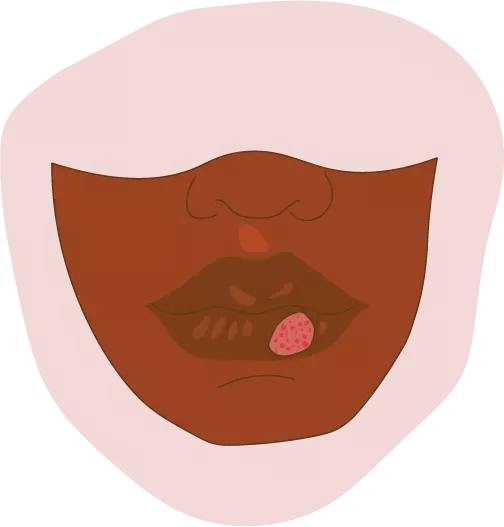
Since childhood, most of us are used to getting blisters on our lips. These blisters never stay more than a couple of days and are never that painful, but they can become a nuisance to our looks, much like getting pimples are. Our parents always told us it was because we ate our food in the sun, and we were chastised and told to always seek shelter from the sun while we ate. That was the explanation we were offered and mostly accepted without question. But as some of us got older and started exploring other sources for information, we learned that the cause of these blisters wasn’t actually standing under the sun while eating, but rather an infection that gets easily transmitted from one person to another by direct contact.

Herpes is the name behind the infection that is responsible for these blisters. Most of us often get them around our mouths, and it can pass from one person to another through acts as simple as kissing, sharing a water bottle, a spoon, and other forms of direct contact. A baby can get herpes as soon as it’s born if its brother, who has herpes, kisses the baby on its cheeks. This is how easily this infection is transmitted!

The cold sores/blisters we get around our mouths are never really that troublesome, and they usually disappear without treatment. But herpes has another subtype that can cause these same blisters around the genital area. The two types aren’t exactly the same though – they are caused by the same virus. However, just because someone has a cold sore, it doesn’t mean they also have the genital subtype of the virus.

Herpes virus is capable of staying in our bodies without causing any symptoms for years. Once we have herpes, we have it for life. Since it’s a chronic condition, we can treat it to contain the symptoms but it never fully goes away. It’s kind of like HIV in that way. That’s why we get cold sores and then won’t see them again for years! What usually happens during this period is that the virus lives dormantly inside our body, but we don’t see any symptoms because our immune system is able to contain the infection. 

There are certain triggers for the Herpes infection to arise like exposure to the sun, recovering from another unrelated infection, and the likes that can decrease the ability of our immune system and increase the chance of us getting a cold sore. So after all, our parents were right in the sense that they understood the correlation between sun and cold sores. Exposure to the sun can be a trigger for recurrence of cold sores, but as for the misconception that the cold sore resulted because of eating food within direct proximity to the sun; well that misconception so far is still just a misconception and to this day has no basis of facts.

One major thing to be aware of is that if you ever go to the doctor to get tested for STIs, they usually skip the Herpes test (for genital herpes) unless you have an active case because blood tests won’t be able to differentiate between gential herpes and herpes that presents as cold sores. The more you know! 


10 Things You Didn’t Know About STI’s

10 Things You Didn’t Know About STI’s

We all know something about Sexually Transmitted Infections (STIs), but there’s so much more than what meets the eye – or meets our reproductive organs, if you may. Here is a collection of some of the most unknown STI facts that could help you before you entangle with a sexual partner.

  • While the risk is low, Sexually transmitted infections can also be transmitted through not just  penis-vagina sex but through other forms of sexual activities like oral sex and anal sex.
  • There are some types of STIs that can live inside your body without showing any kind of symptoms. Even so, you can still transmit these infections to other sexual partners. 

This makes STI’s dangerous even more than they already are because people can transmit them without knowing and that can lead to a lot of people being affected, this is why screening for STIs regularly is strongly advised for people who are sexually active.

  • STI’s tend to be worse / more severe on women than men. They are also more frequent on women.

In women, sexually transmitted infections tend to not show any symptoms and then later progress to cause complications. This is especially harmful because most women remain in the dark about having sexually transmitted infections until it’s too late.

  • Women can also pass down these infections to their babies if they are pregnant while having STI’s.

This transmission can occur while they are pregnant, during birth, or while breastfeeding. All doctors are supposed to test women for STIs during their first prenatal appointment. If they have an STI, they are recommended for treatment. It is important that a pregnant mother notifies her partner so she won’t contract the STI again. 

  • Some STIs can increase your risk of having cancer in the future.

The human papillomavirus is a sexually transmitted infection that can get transmitted through contact with bodily fluids. This virus can increase the chance of a woman acquiring cervical cancer. There is an HPV vaccine in Ethiopia, so we recommend women and men to ask their Doctor for this vaccine to prevent HPV and reduce the risk of cervical cancer in women. 

  • Because of the similarity of the symptoms they can cause, some STIs can oftentimes be grouped together.

Herpes, syphilis, and chancroid are sexually transmitted infections that all-cause blisters around the genital areas, which would lead to pain and discomfort while peeing or during sexual intercourse. Gonorrhea and chlamydia are sexually transmitted infections that mainly cause discharge from the vagina/penis and therefore, they are grouped together. In order to differentiate the STIs and get proper treatment, a doctor will need to lab test for all STI’s to identify which infection you have. 

  • If not properly treated,  STIs can result in devastating complications.

Some of the most commonly known complications of sexually transmitted infections include infertility, cancer, and even infections that can travel to the brain. Prevention and early treatment are vital to combat these risks. 

  • If you are sexually active, we can’t stress enough that you need to get screened for sexually transmitted infections every 3 months.

Screening is a process of checking you for sexually transmitted infections through a series of blood tests your doctor orders for you. You can go get screened at any nearby health center, and this process makes it possible for you to have a healthy and enjoyable sex life, free of complications. We also encourage you to ask your partner to get tested before you begin your sexual journey with them. 

  • The only sure way of protecting oneself against sexually transmitted infections if you are sexually active is to wear condoms during any form of sexual play.

If properly worn, condoms can protect from sexually transmitted infections as well as prevent pregnancy. Other forms of contraceptives can only prevent pregnancy, not STI’s. Wearing condoms to prevent STIs includes vaginal, oral, and anal sex. 

  • If you have the symptoms commonly associated with sexually transmitted infections, no need to panic! Just go to your nearby health center, and your health care provider will examine you and provide you with the treatment you need.

There is nothing to be ashamed of when it comes to STI’s. It can happen to everyone, and there are doctors who are specifically trained to help you with short and long-term treatment and care. 

The most important thing is to be open and honest with your doctor and your partner when it comes to these conversations. If you are nervous to ask your partner about STIs or to get tested, that means you are probably not ready to have sex. Make sure to contact a doctor if you have any concerns, want more information, or just to get tested. We hope this has brought you one step closer to a safe and healthy sexual journey! 

The Dark Side of Puberty Nobody Tells You About

The Dark Side of Puberty Nobody Tells You About

The changes each of us go through during puberty can be puzzling to figure out, especially in a country like ours where the information you can get for these kinds of topics is limited. 

Parents don’t think it’s the norm to discuss these issues with their kids, it’s not out of malice or anything, it’s just the culture we have can be restrictive in such cases. 

This has resulted in confused kids who often get their information through internet sites, and while that can be beneficial, the information you can find on the internet is often unfiltered and can be misleading. This is why as a culture we have to evolve enough to make it a norm to discuss such issues and have a platform that allows us to learn from each other’s experiences.

When we come to the topic at hand, puberty is a normal physiological process our bodies go through when the time comes. Girls are known to go through puberty a bit earlier than boys. 

This period can be challenging in a lot of ways; our bodies are going through a lot of changes and these changes are due to hormones called estrogen and progesterone for girls, and lots of testosterone for guys.

These hormones are responsible for all of the changes that occur in our bodies but they also affect our moods and mental status. For guys, these changes have been known to be associated with aggressive mood swings. During this period guys can act out and be difficult to handle for their parents. This is mostly fueled by hormonal changes happening in their bodies. 

For most teenagers, puberty is the time where personal development takes place and they start questioning the beliefs they were taught by their parents for their whole lives, a rebellious stage if you will. This is a very sensitive time because the sense of self we develop at this time can follow us through our adult years.

The physical changes that occur during this time can also attribute to the mental changes a teenager goes through. A self-esteem issue can arise because of peer pressure. The changes our bodies go through might come later, or be different than the changes our friends are going through. This can result in teasing, which can affect the way we view ourselves and have an effect on our confidence. 

The mental issues/changes puberty causes have remained a mystery for most of us, simply because discussion about these topics is limited. In our culture, parents don’t fully understand the benefits of discussing such issues and that can result in confused children, so as a culture, we need to evolve enough to encourage discussion of such topics. Just remember: mood swings, anger issues, and a loss of sense of self are some things every teenager goes through. It’s our job to be understanding and kind to everyone – we never know what challenges people are facing, especially within themselves. 

wpChatIcon