Puberty, and All The Little Details

Puberty, and All The Little Details

Puberty is a period of a comprehensive set of physical, emotional and mental changes. It can be a challenging time for children to go through, especially if they aren’t well informed. It occurs because of hormonal changes – the main hormones that come into play during this period are progesterone and estrogen as well as testosterone.

Girls usually experience puberty a little earlier than boys, which is what is expected and maybe also maybe the origin of the saying ‘’ girls mature faster than boys’’. For girls, the average age in which they experience puberty is from 9-12 and for boys it’s between the ages of 10-13.

Girls go through many physical changes during puberty: 

  1. The breasts will grow bigger. In many girls, this is the first sign of puberty.
  2. Hair grows in the genital area (pubic hair), under the arms, and on the legs. In some girls, pubic hair is the first sign of puberty.
  3. Girls start to get their monthly periods. Monthly periods usually start within 2 years after the breasts or pubic hair start growing. When a girl first starts getting her period, she might not get one every month. It is normal for a period to skip a month, or come twice in a single month. Some girls feel bloated or have mood changes right before they get their period, often called PMS. Girls can have white or clear vaginal discharge seen in their underwear, this is extremely normal! 
  4. Vaginal discharge is the term doctors use to describe the small amount of fluid that comes out of the vagina during this period. Girls can have white or clear vaginal discharge which is part of the physiological process and it’s only when this discharge has odor or changes in color that it becomes a cause for concern.

As for the guys, the main physical changes that occur are:

  1. The testicles get bigger. This is usually the first change that happens.
  2. The penis gets longer and wider.
  3. Hair grows in the genital area (pubic hair), on the face, and under the arms.
  4. The voice changes and it becomes deeper.
  5. Boys can ejaculate a small amount of sperm at night while they sleep. This is sometimes called a “wet dream.”
  6. The breasts can get slightly bigger. This usually goes away over time and sometimes it doesn’t, which is also perfectly normal.

There are also minor physical changes attributed with puberty for both girls and boys, which include sweating with order, eyesight changes (if a child is going to need glasses, then he/she would start needing them during puberty) as well as skin changes like acne on their face, back, and arms.

When we talk about puberty, we mentioned that the average age for puberty is 9-12 for girls and 10-13 years for guys, but everybody’s experience can be different and unique to their own. 

Puberty can come earlier and it could also come later than the average ages listed above, and in most cases this can be normal but there are cases when it’s not normal.

In the medical community the official term given for early puberty is when puberty starts earlier than the age 8 for girls and age 9 for boys, and puberty is medically considered late for girls when it occurs later than 12 and for guys when it’s later than age 14.

Doctors will assess the reasons behind these occurrences and can rule out if there are problems or not so it’s recommended to go get checked out when your puberty is early or late.

Aside from the physical changes, puberty can also be associated with mental changes. For both sexes, this time can be attributed to severe mood swings which can result in behavioral changes. If parents aren’t understanding of their kids during this period, it can lead to a divide between the communication of a parent with his/her child. 

Many teenagers go through a hard time during puberty because of all of the mental changes that happen during this process. Depression, anxiety, and self esteem issues all begin to arise around puberty. It’s the first time many of us begin to feel doubt about things we were totally confident about just years ago. The internet is a great place for research at times, but when it comes to the digital age, many teenagers find themselves comparing themselves to people online who only display a fraction of their lives. It can lead to unhealthy habits such as eating disorders and mental issues. It’s important to make sure that teenagers feel like they have a safe space to talk about their emotions, and that starts at home. 

For more information on changes during puberty, consult a doctor or psychiatrist for more information and resources. Remember – everyone goes through it, make sure you are taking it one day at a time. 
The Hymen, The ‘So-Called’ Sign of Virginity

The Hymen, The ‘So-Called’ Sign of Virginity

If you are a girl and you have hit puberty, you’ve most likely have been told numerous times by now that your virginity is a sacred matter, and that you should never give it away before marriage. Such tales of caution are usually reserved for girls only. Boys are rarely advised of such things, and in most households, parents think that it’s the girl that needs to be careful, that needs to save herself, that needs to remain ‘pure’.

The myth of the hymen as a sign of virginity goes back decades, if not centuries! There are many cultures to this day that have practices based on this myth. It’s a story as old as time: On her wedding day, a woman must bleed after her first night with her husband. Her husband must then take the sheets she bled upon and show it off to his groomsmen as proof that he married a virgin. This is the way that men verified that their wife is ‘pure’. 

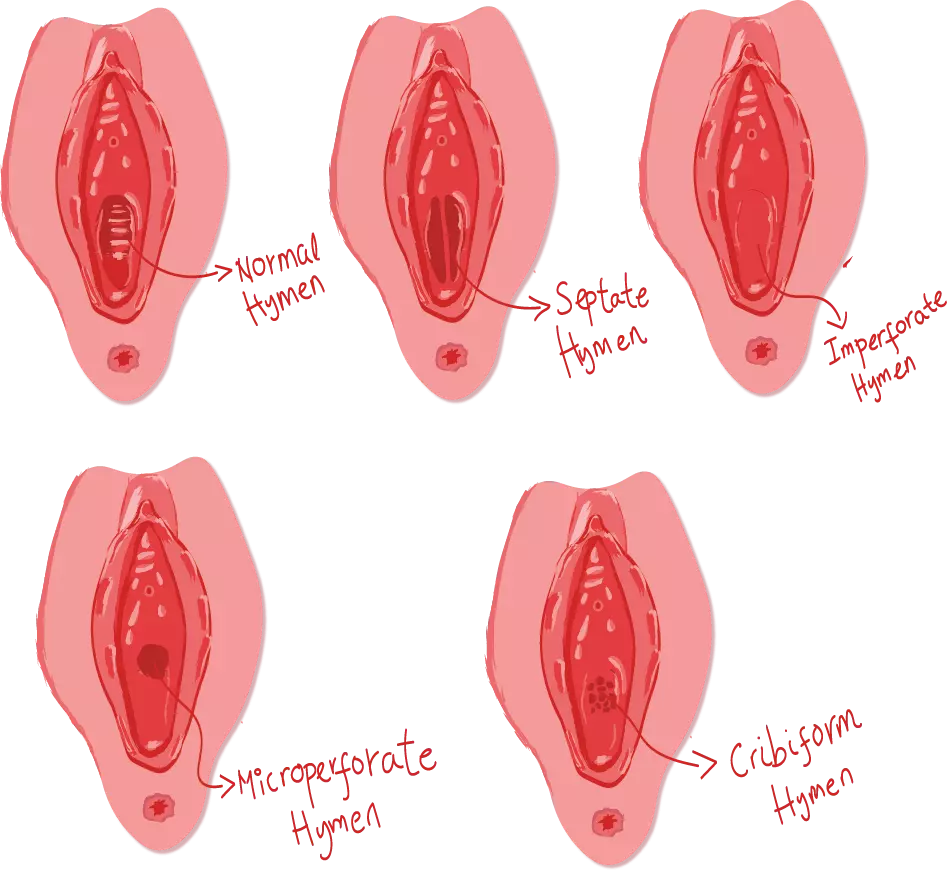
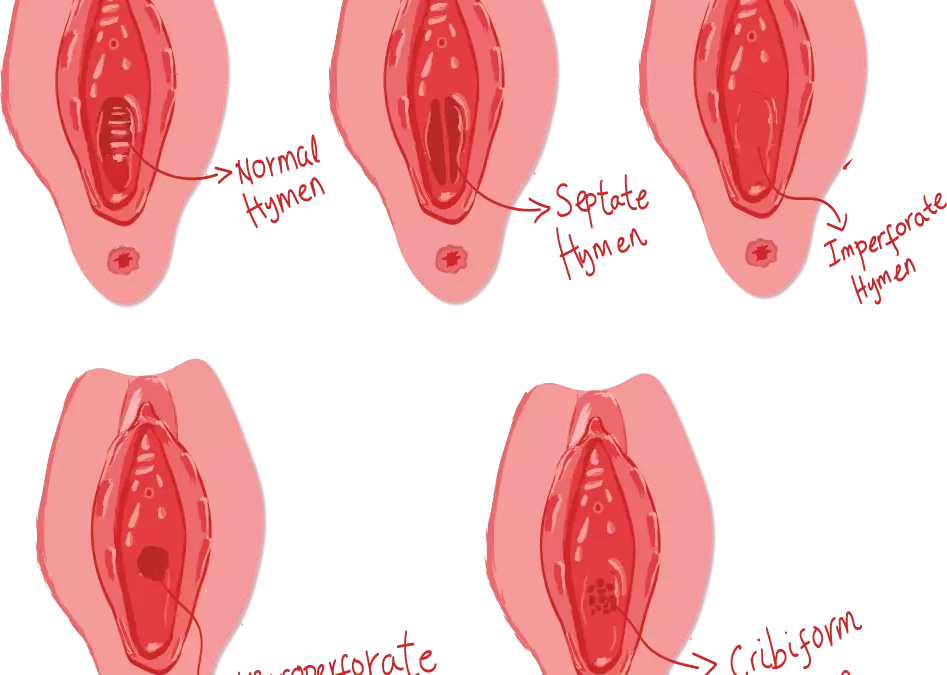
These and many other cultural practices have cemented the hymen as a sign of virginity. Parents teach their children this myth, as well as many religious organizations. When we look at the facts, however,  the hymen can’t be the end-all sign of virginity. It’s merely tissue that partly covers the opening to the vagina. Actually, it doesn’t even cover enough to make a dent! If it did, menstrual blood would have an extremely difficult time flowing out of the vagina. Which is actually a type of hymen that can be found, it’s called closed hymen and if that’s the type of hymen you have you would need to go get medical help. Because of this and many other reasons, the hymen being considered the all-end sign of virginity is a flawed concept at best and so it’s extremely frustrating that even in today’s times, people still rely on it “breaking” to prove a woman’s first time having sexual intercourse.  

It’s unclear when exactly the hymen started being regarded as a sign of virginity, but it couldn’t be further from the truth. The hymen is an elastic piece of tissue that covers the vaginal opening partially and it comes in different shapes and sizes. Your hymen can easily break doing absolutely anything! Most girls (if they even have a hymen, to begin with) can break it during sports or physical exercise, inserting a tampon- the possibilities are endless. For some people, their hymen can break during a form of self-pleasure or sexual act called ‘Fingering’, where a finger is placed into the vaginal canal. 

For details on the different types of hymens, we encourage you to look into our anatomical fact sheet here on our website. For a quick rundown: 

  • Some girls are born without a hymen at all 
  • Hymens break easily 
  • If you in fact have a closed hymen, it’s a condition you need to get treated for altogether. 
  • Some women don’t even bleed when their hymen breaks.

    It is true that you could lose your hymen without even knowing it. Some people may report a small amount of bleeding or pain, but most women don’t even feel a thing. A lot of stories have come out over the years about women from various religious backgrounds having to prove their virginity upon marriage. If they don’t their husbands can ‘return’ their wives back to their families. Imagine, you settle down to marry the love of your life, and the first night with your husband, he tells you that he can’t continue this marriage or doesn’t believe you just because you didn’t bleed after having sex. 

    It’s sad that these myths can ultimately ruin a foundation or trust. In the health community, it is our job to put information out there to break the stigma surrounding hymens and virginity. Our virginity shouldn’t signify our value or importance as women. We are complete – whether we have a hymen or not.

    How Much Do We Know About our Reproductive Anatomy?

    How Much Do We Know About our Reproductive Anatomy?

    Due to the fact that in countries like ours, issues like these are strictly taboo and that most don’t discuss the issue openly, we have been left to wonder about such parts of our bodies.

    Sure, we learned about them in sixth or seventh grade as they were part of the curriculum, but it was an unspoken rule that asking these sorts of questions as well as being curious about the subject made you ‘’balege’’. So, most of us learned at a young age to suppress our curiosity about such topics. Cultures that frown upon open discussion of such topics can affect the lives of young children in a lot of ways. Boys can go through one of the most challenging periods of their lives in confusion without getting the help they need, and girls for whom discussion of such topics is of the utmost importance, go through difficult challenges alone and often in a lot of confusion.

    Below we have listed the different anatomical parts of both the female and male reproductive systems to give readers more insight on what our body parts actually are. 

    The male reproductive anatomy, the external at least, because of the fact that it’s easily visible, can be understood without much difficulty. This isn’t the case for female reproductive anatomy, however. Because of this fact, most females find it difficult to make sense of the things that take place inside their own bodies, and often they have almost no one to talk to about their bodies or the changes their bodies go through.

    The female reproductive anatomy can be divided into two parts, the external and the internal reproductive areas. The external anatomy contains the following major parts:

    • The external set of lips that are immediately visible are called the labia majora and the labia minora.
    • The Bartholin glands that supply the vagina with the secretions it needs to prevent friction. 
    • There are the two openings: the urethra through which the body gets rid of urine. and the opening of the vagina that leads to the uterus.
    • There is also the clitoris, which is the main pleasure center of the vulva, filled with nerve endings. 

    Through the vagina we find the internal parts of the female reproductive anatomy: 

    • Immediately after the vagina, we find the cervix, which serves as a gate to the uterus.
    • The uterus is one of the most amazing organs in the female body, its where the baby grows.
    • Along each side of the uterus, fanned out as wings we find the two fallopian tubes which transport the eggs from the ovaries to the uterus.
    • There are the ovaries which serve as a store and maturation place for the eggs a woman has. The ovary sends out an egg each month to the uterus through the fallopian tubes.

    When we come to the male reproductive anatomy, we also have different parts that come together to make their reproductive system. Beginning with the most famous, PENIS! 

    The penis is made of several parts:

    • Glans (head) of the penis: In uncircumcised men, the glans is covered with pink, moist tissue called mucosa. Covering the glans is the foreskin (prepuce). In circumcised men, the foreskin is surgically removed and the mucosa on the glans transforms into dry skin.
    • Shaft – The shaft of your penis extends from the tip to where it connects to your lower belly. It looks like a tube. Your urethra is inside the shaft.
    • Foreskin – The foreskin is a patch of skin that covers and protects the head (AKA glans). When your penis gets hard, the foreskin pulls back and the tip is exposed. Sometimes foreskin is circumcised (when a doctor surgically removes your foreskin) soon after birth, so not everyone has it.
    • Scrotum- The scrotum (AKA ball sack) is the sac of skin that hangs below your penis. Your scrotum holds your testicles and keeps them at the right temperature. If it’s too cold, your scrotum pulls your testicles closer to your body. If it’s too warm, your testicles hang away from your body.
    • The testicles- which are found wrapped by the scrotum, serve to produce the sperm and main male hormone known as the testosterone. On top of the testes you will find the epididymis which basically looks like a lining that is found on top of the testes and serves to mature and store the sperm.

    From the epididymis, the sperm is then transported through the vas deferens to the urethra, one opening, where in males, both the urine and the sperm get discharged.

    Side note, you probably have heard of vasectomies before, a vasectomy is a procedure done on a man that would make him sterile, and the procedure involves cutting out the vas deferens which is where the procedure got its name.

    These are the basics regarding the male and female anatomy of the reproductive system. For more information on questions, please feel free to leave comments or questions on our website or other social media platforms. 

    wpChatIcon